



- Socket
- AM5
- Cores
- 8
- Threads
- 16
- Frequency
- up to 5.0 GHz
- Cache
- 104 MB
- TDP
- 120 W
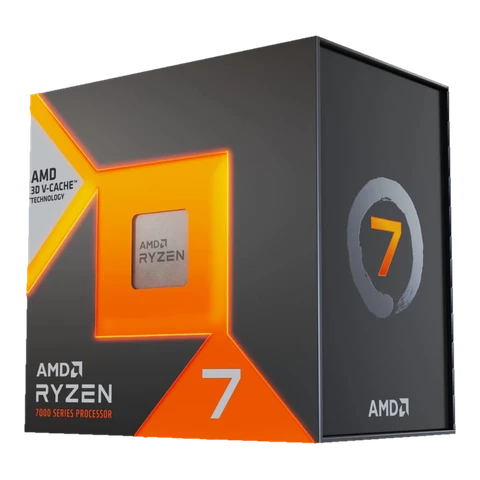
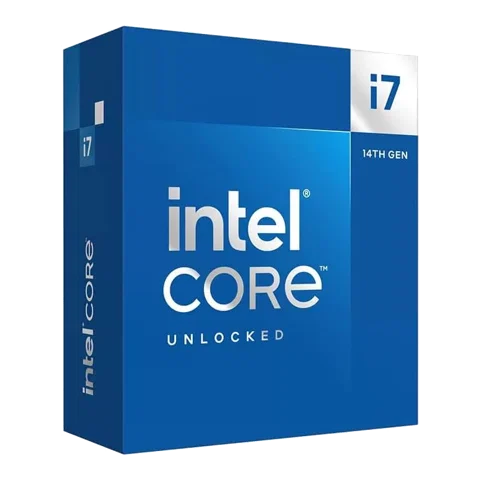
A classic matchup between a specialist and an all-rounder. The Ryzen 7 7800X3D has 8 Zen 4 cores and 96 MB of L3 cache for gaming; the Core i7-14700K has 20 cores (8 P + 12 E) and 28 threads.
Ryzen 7 7800X3D
Pick it if…
You mostly game, want high FPS with low power draw (120 W TDP), and want an AM5 platform with a future.
Core i7-14700K
Pick it if…
You mix gaming with editing, rendering or compiling and want far more threads, or want to reuse DDR4 memory.
at Amazon
Price updated on 07/10/2026
Buy on Check today's price (opens in a new tab)
Note. Different sockets (AM5 and LGA1700): they are not interchangeable on the same motherboard. Switching from one to the other means changing the motherboard.
Warning. Different memory types between the CPUs (DDR5 and DDR4/DDR5): the RAM from one will not work with the other.
We highlight the best value in each row with a soft background. A higher or lower value does not mean the processor is better for you: it depends on how you use it.
| Specification | Ryzen 7 7800X3D | Core i7-14700K |
|---|---|---|
| Price | ||
| Best price | $359.99 (best value in this row) | ≈ $580.00 |
| Performance per dollar (pts per USD) | 0.11 | Data not available |
| Processing | ||
| Cores | 8 | 20 (8P + 12E) (best value in this row) |
| Threads | 16 | 28 (best value in this row) |
| Base frequency | 4.2 GHz (best value in this row) | 3.4 GHz |
| Boost / turbo frequency | 5.0 GHz | 5.6 GHz (best value in this row) |
| L2 cache | 8 MB | 28 MB (best value in this row) |
| L3 cache | 96 MB (best value in this row) | 33 MB |
| L2 + L3 cache | 104 MB (best value in this row) | 61 MB |
| Power and temperature | ||
| TDP / base power | 120 W (best value in this row) | 125 W |
| Maximum power (PPT / turbo) | Data not available | 253 W |
| Maximum temperature (Tjmax) | Data not available | Data not available |
| Platform | ||
| Socket | AM5 | LGA1700 |
| RAM | DDR5 | DDR4 / DDR5 |
| Official RAM speed | 5,200 MT/s | 5,600 MT/s (best value in this row) |
| PCIe | PCIe 5.0 | PCIe 5.0 y 4.0 |
| Integrated graphics | AMD Radeon Graphics | Intel UHD Graphics 770 |
| Architecture | Zen 4 | Raptor Lake Refresh |
| Generation | Ryzen 7000 series | 14th Gen Core |
| Release | April 2023 | October 2023 |
| Unlocked multiplier | Yes | Yes |
| Performance scores | ||
| gaming score (0-100) | Data not available | Data not available |
| productivity score (0-100) | 41 | Data not available |
| single-core score (0-100) | Data not available | Data not available |
| multi-core score (0-100) | Data not available | Data not available |
| efficiency score (0-100) | Data not available | Data not available |
Still to be verified on the official spec sheet: Ryzen 7 7800X3D (Release date (month), PCIe version, Memory channels, Official RAM speed, Maximum power (PPT), Maximum temperature (Tjmax), PCIe lanes, Maximum RAM capacity); Core i7-14700K (Base and boost frequencies, Release date (month), Official RAM speed, PCIe version, Maximum temperature (Tjmax), PCIe lanes, Maximum RAM capacity).
Scores from 0 to 100 calculated from sourced benchmarks. If there is no real data, nothing is shown.
Gaming
Single-core
Multi-core
Productivity
Efficiency
Sources: Blender Open Data.
Relative performance (in Blender 3D rendering, not in games) divided by the current price. It is a figure to interpret, not a verdict.
Ryzen 7 7800X3D
Core i7-14700K
We couldn't find a video of this exact combination. These include one of the products or cover products of a similar tier: they work as a reference, but FPS depends on the GPU, the games and the settings of each test.
Productos de nivel parecido
Channel: Canal por verificar
Watch on YouTube (opens in a new tab)Productos de nivel parecido
Channel: Canal por verificar
Watch on YouTube (opens in a new tab)Productos de nivel parecido
Channel: Canal por verificar
Watch on YouTube (opens in a new tab)Productos de nivel parecido
Channel: Canal por verificar
Watch on YouTube (opens in a new tab)Visual comparison of the official specifications. It does not measure real-world performance.
Cores
Threads
Boost / turbo
L2 + L3 cache
TDP / base power
Relative scale among the selected CPUs (100 = highest value on each axis). These are specifications, not performance.
The 7800X3D is one of the go-to gaming CPUs thanks to its 96 MB cache, which helps a lot in CPU-bound games. The 14700K games well, but it draws considerably more power for similar results.
In multithreaded tasks, the 14700K's 28 threads clearly beat the 7800X3D's 16. If you export video or render often, you'll notice that difference in wait times.
The 14700K can reach 253 W maximum turbo power and calls for serious cooling; you'll also want the latest BIOS for the stability microcode. LGA1700 is a dead end; AM5 lets you move up to a 9800X3D or another future Ryzen on the same motherboard.
Based on official catalog specifications. Prices change: check the table, which shows the date of each price.